One of the most common questions I’m asked—and one of the hardest decisions business owners and executives must make—is how much to spend on marketing. Budgeting is always a challenge, regardless of the area of the business, but it is particularly difficult when it comes to marketing.
Marketing expenditure is an investment in the future, and as with any investment, it is nearly impossible to predict the return on investment (ROI) with a high degree of certainty. Furthermore, marketing attribution—the process of identifying and assigning value to the marketing efforts that contribute to a customer’s conversion—is complex. As John Wanamaker famously said, “Half the money I spend on advertising is wasted; the trouble is I don’t know which half.”
Determining what should be included in a marketing budget can be confusing. I have worked with clients who maintained a budget section for “advertising” but not for “marketing.” Some included only direct advertising expenses, while others grouped all marketing-related costs into a single lump sum. The problem with the first approach is that it fails to account for the full scope of marketing costs (such as management and creative). The problem with the second is the inability to isolate performance and accurately calculate ROI across different activities.
What Should Be Included in Your Marketing Budget?
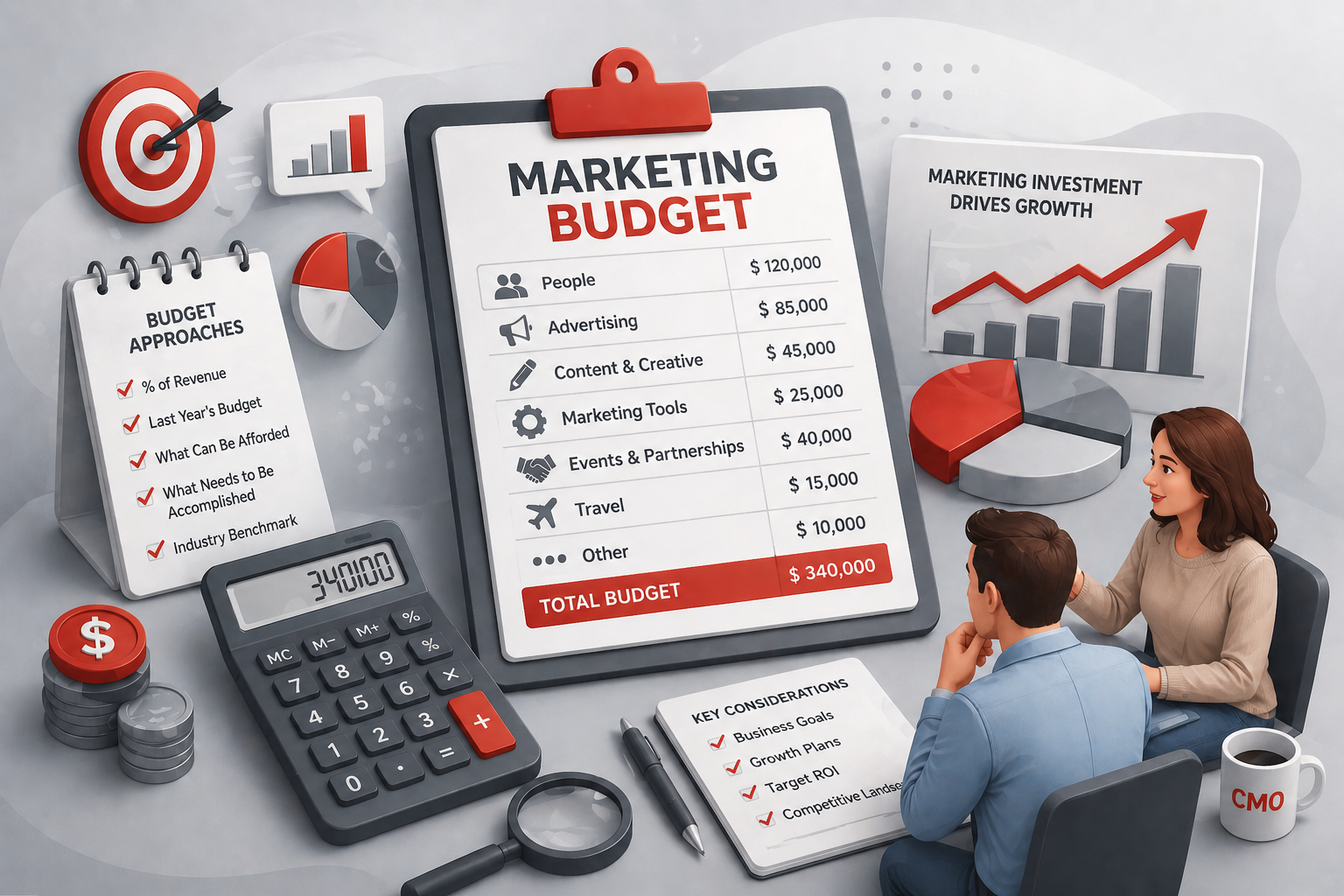
A true marketing budget should include every expense associated with planning and executing marketing activities. Common line items include:
- Payments to marketing managers, employees, and consultants
- Materials purchased and used for marketing purposes
- Marketing tools (hardware, software, subscriptions, online services, etc.)
- Payments to third-party vendors, including media platforms, advertising channels, public relations, press releases, printers, promotional items, trade shows, conferences, and endorsements
- Marketing-related travel
It is advisable to further break down these line items by campaign, initiative, or functional area. Doing so allows for better planning and more precise ROI analysis.
Another important consideration is the use of prorated costs. For example, if a team member or consultant dedicates only part of their time to marketing, only that portion should be allocated to the marketing budget. The same principle applies to shared resources such as software, hardware, and subscriptions—only the portion used for marketing should be included.
Common Marketing Budget Approaches
There are several common approaches to determining how much to allocate to marketing. Each has its advantages and limitations.
- Percentage of Past Revenue
Basing your marketing budget on past revenue is common, largely because it is simple and straightforward. However, it can reinforce extremes.
For example, if last year’s sales were below expectations, the marketing budget may need to increase to support growth, not decrease. Conversely, if sales exceeded expectations, increasing the budget may not be necessary.
- Last Year’s Budget, Adjusted
Starting with last year’s budget and adjusting it up or down is another straightforward approach, but it must be used carefully. The new budget should reflect current objectives—not last year’s conditions.
For example, if you launched multiple products last year and invested heavily in marketing, but have no new launches planned this year, last year’s budget may be too high. The reverse is also true. Changes in costs—such as advertising, labor, and travel—should also be factored in.
- What Can Be Afforded
Budgeting based on available funds is sometimes necessary. However, this approach ignores what needs to be achieved.
If your available budget is insufficient to meet your marketing objectives, you may need to consider reallocating funds or exploring external financing. Conversely, having the ability to spend more does not necessarily mean it should be spent.
- What Needs to Be Accomplished
Basing the budget on defined goals and required outcomes is a logical and strategic approach—but also one of the most difficult.
This method requires confidence in marketing attribution and a clear understanding of how specific activities contribute to results. In practice, attribution is often complex and imperfect.
- Industry Benchmarks and Competitive Comparison
Comparing your marketing budget to industry benchmarks or competitors can provide useful context. However, this approach has limitations.
Reliable, relevant data—especially for small to mid-sized businesses—is difficult to obtain. Even when data is available, it is often unclear what is included in those figures. Additionally, your goals and circumstances may differ significantly from those of your peers.
For example, a recent Gartner’s CMO Spend Survey reports that marketing budgets average 7.7% of company revenue, with a median of 6%. While these figures provide a general benchmark, they should not be applied without considering your specific situation.
Conclusion
I recommend that clients consider multiple approaches before finalizing their marketing budget. A useful starting point is approximately 5% of expected revenue, followed by adjustments based on the methods outlined above.
It is especially important to account for marketing investments tied to new initiatives, such as product launches, market expansion, or major events. Fractional CMO & Marketing helps clients evaluate the marketing spend of their closest competitors and the broader industry. This does not mean that you should be matching competitors dollar-for-dollar, but it can provide valuable insight into potential gaps or opportunities.
Determining your marketing budget is a critical component of both marketing effectiveness and overall financial discipline. While adjustments can be made during the year, they are often too late and difficult to implement once resources have been committed.
At Fractional CMO & Marketing, we support clients across all phases of marketing—from strategy development to planning and execution. Developing a sound marketing budget is a key part of that process. If you have questions or need assistance, we would be glad to help.
Not Sure What Your Marketing Budget Should Be? Start With a Diagnostic.
If you’re uncertain whether your marketing budget is too high, too low, or simply misallocated, the next step is gaining clarity, not guessing.
Our Marketing Diagnostic Assessment is designed to identify what’s actually driving—or limiting—your growth. We evaluate your current strategy, spending, channels, and performance to uncover gaps, inefficiencies, and missed opportunities. From there, we provide clear, objective recommendations so you can make confident, informed decisions about your marketing investment.
Before you commit more budget—or cut back in the wrong areas—make sure you’re solving the right problems.
Schedule a Marketing Diagnostic Assessment →
Frequently Asked Questions About Marketing Budgets
- What percentage of revenue should be allocated to marketing?
While it varies by industry and growth stage, many businesses allocate between 5% and 10% of revenue to marketing. However, the right percentage depends on your goals, competitive landscape, and growth strategy—not just industry averages.
- How do I know if my marketing budget is too low?
If you’re consistently falling short of lead generation, pipeline, or revenue targets—and marketing efforts are limited or inconsistent—your budget may be insufficient. A proper diagnosis can determine whether the issue is the budget level or how the budget is being allocated.
- What is the difference between a marketing budget and an advertising budget?
An advertising budget is just one component of a marketing budget. A complete marketing budget includes strategy, personnel, tools, content, branding, campaigns, and analytics—not just paid media.
- Should small businesses invest in marketing even with limited funds?
Yes. Even with limited resources, consistent and well-directed marketing is critical for growth. The key is prioritization—focusing on the highest-impact activities rather than trying to do everything.
- How often should a marketing budget be reviewed?
Marketing budgets should be reviewed regularly—typically quarterly—to ensure alignment with performance, market conditions, and business objectives. However, the overall budget should be thoughtfully planned in advance to avoid reactive decision-making.
- Can marketing ROI be measured accurately?
Marketing ROI can be measured, but not always with complete precision. Attribution models provide useful insights, but they often involve assumptions. The goal is not perfect accuracy, but informed decision-making based on the best available data.